10 Easy Indoor Enrichment Ideas for Dogs
A little sniffing, searching, learning, or play can bring more interest to an ordinary day at home.
Rain tapping on the windows? A shorter walk than planned? These indoor enrichment ideas for dogs
give you simple ways to add variety without turning your living room into an obstacle course.
You do not have to try all ten. Choose one your dog enjoys, make it easy to begin, and leave room
for a break.
What Counts as Enrichment?
Enrichment gives dogs opportunities to do things that matter to them, including searching,
exploring, playing, and learning. Different dogs enjoy different activities. The point is to offer
something rewarding for your dog, rather than simply keeping them busy.
Indoor games complement suitable exercise, toilet breaks, companionship, and rest. They do not
replace those needs, and there is no reliable formula that turns a few minutes of sniffing into a set
number of minutes of walking.
Before You Start
Use a quiet space with secure footing. Supervise activities and put materials away afterward. If you
have more than one dog, give each dog a separate space for food games and valued toys.
Take food rewards from your dog’s usual daily allowance where practical, and stick with food that
suits their diet. Choose sturdy equipment appropriate for their size and chewing style. Remove
damaged items.
Avoid fabric or cardboard activities if your dog tears off and swallows pieces. If your dog has
movement restrictions, follow your veterinarian’s activity instructions. Let your dog walk away;
enrichment should not become a test they have to finish.
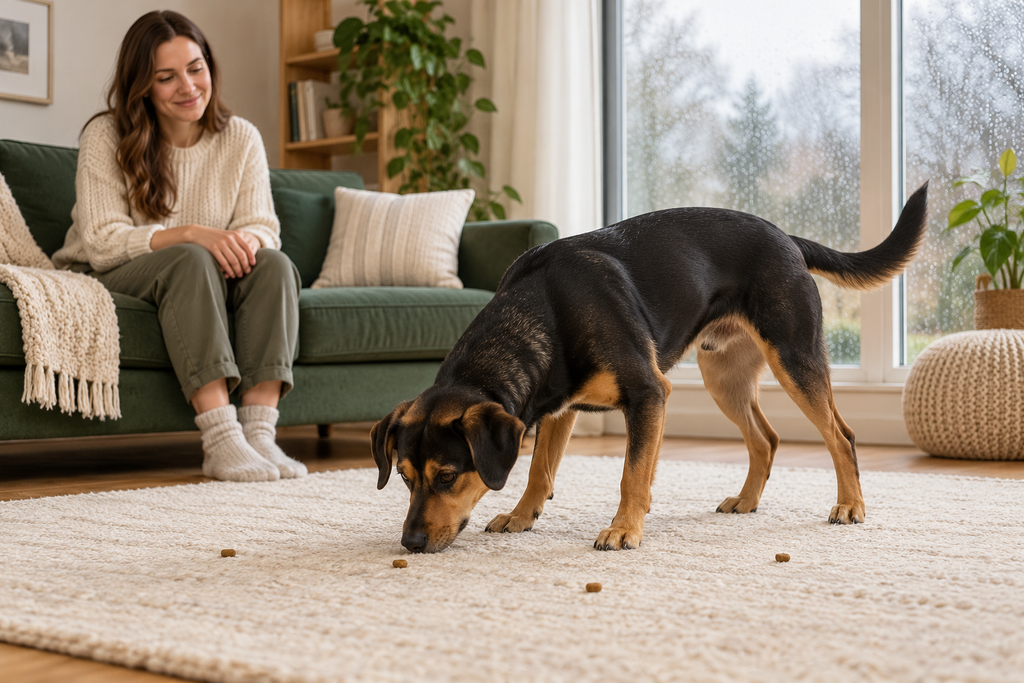
1. Start With a Simple “Find It” Game
You need: A few pieces of your dog’s usual food and a clean, non-slip area.
Place two or three pieces in plain sight nearby. Say “find it” once and let your dog investigate at
their own pace. Begin with a small area so the food is easy to discover.
Make it easier: Place the next piece where your dog can see it land. You can explore a longer
version in The 5-Minute Sniff Hunt.
2. Try an Open Towel Search
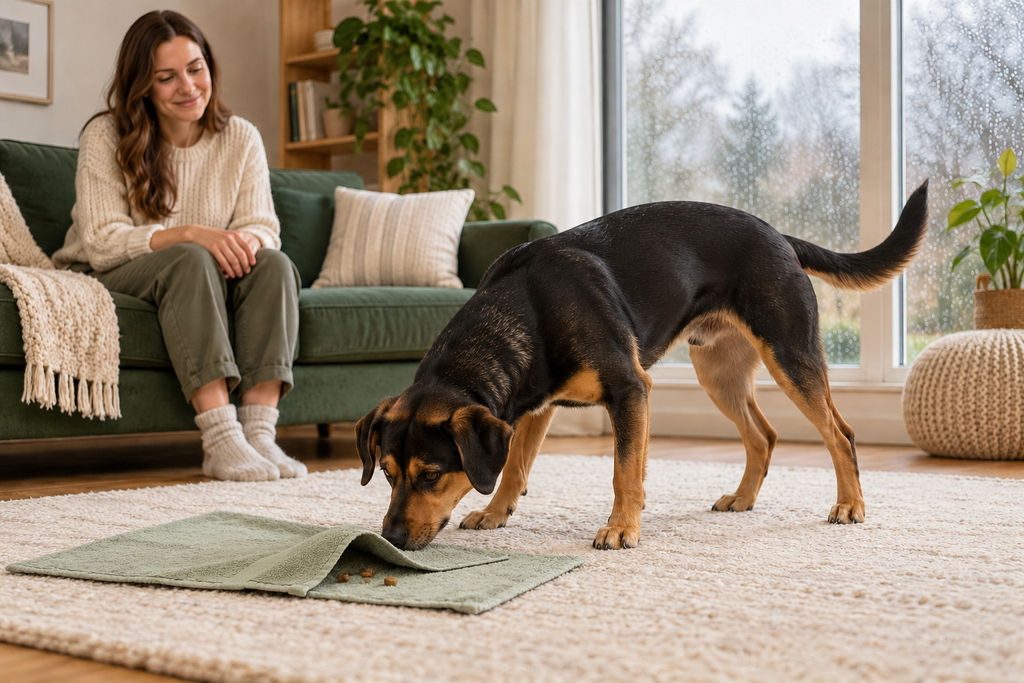
You need: An intact towel and a small portion of food
Lay the towel flat on a secure surface. Place food on top, then loosely fold one edge over a few
pieces. Allow your dog to nose the edge aside. Start with an open fold rather than a tight roll or
knot. This is a simple adaptation of a roll-out food-search activity.
Keep it suitable: Skip this game for dogs who chew or swallow fabric. Never pull the towel away
from a dog who is guarding it; give them space and seek qualified help.
3. Make a Beginner Box Search
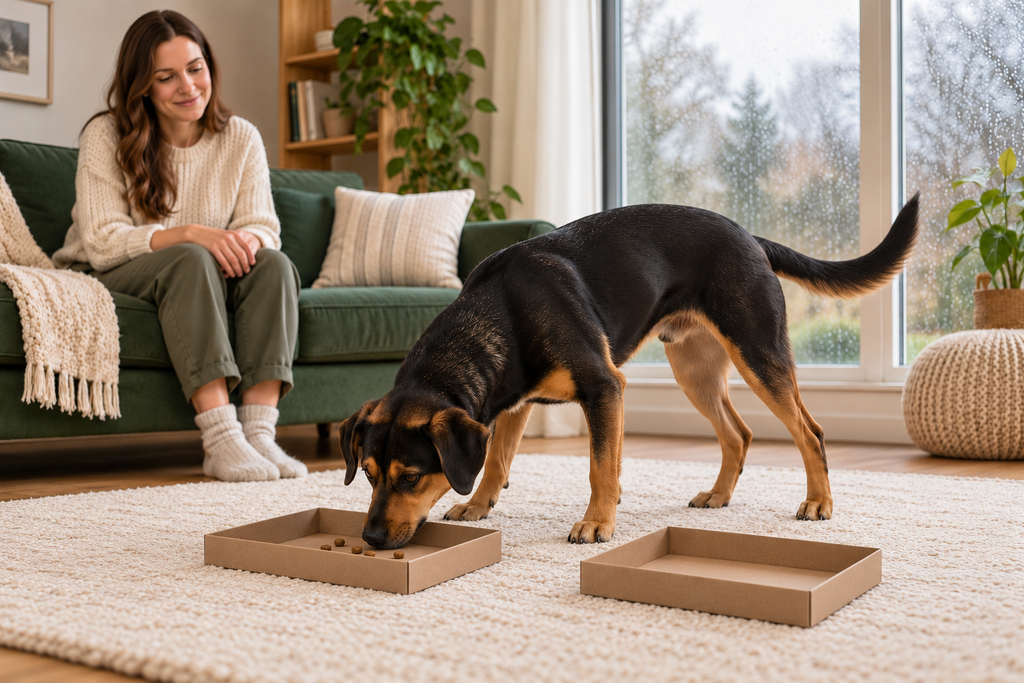
You need: Two shallow, open cardboard boxes with tape, staples, and loose packaging removed.
Place the boxes apart on the floor with a little food visible inside one. Let your dog sniff and choose
which box to inspect. Keep both boxes open and easy to reach. There is no need to add shredded
paper or close the lids. This is a simplified version of a scent-search game.
Make it easier: Begin with one box. Skip cardboard if your dog eats it.
4. Hide a Favorite Toy in Plain Sight
You need: A familiar toy your dog enjoys.
Let your dog watch you place the toy just beside a chair or partly behind a cushion at floor level.
Invite them to find it, then celebrate with the kind of play they like. Keep the route clear; do not hide
toys where a dog must squeeze, jump, or climb to reach them.
Make it easier: Leave most of the toy showing. Not every dog enjoys retrieving, and finding the
toy can be enough.
5. Offer an Easy Licking Activity
You need: A purpose-made, size-appropriate licking mat and a small amount of suitable soft food.
Spread a thin layer of food your dog already tolerates across the surface. Set it somewhere stable
and supervise. Start with an easy, unfrozen version. Check the product’s care instructions and wash
it after use.
Keep it suitable: Some dogs chew mats instead of licking them. If that is your dog, choose another
activity. Do not add unfamiliar ingredients just to make a recipe look interesting.
6. Turn Part of Dinner Into a Simple Puzzle
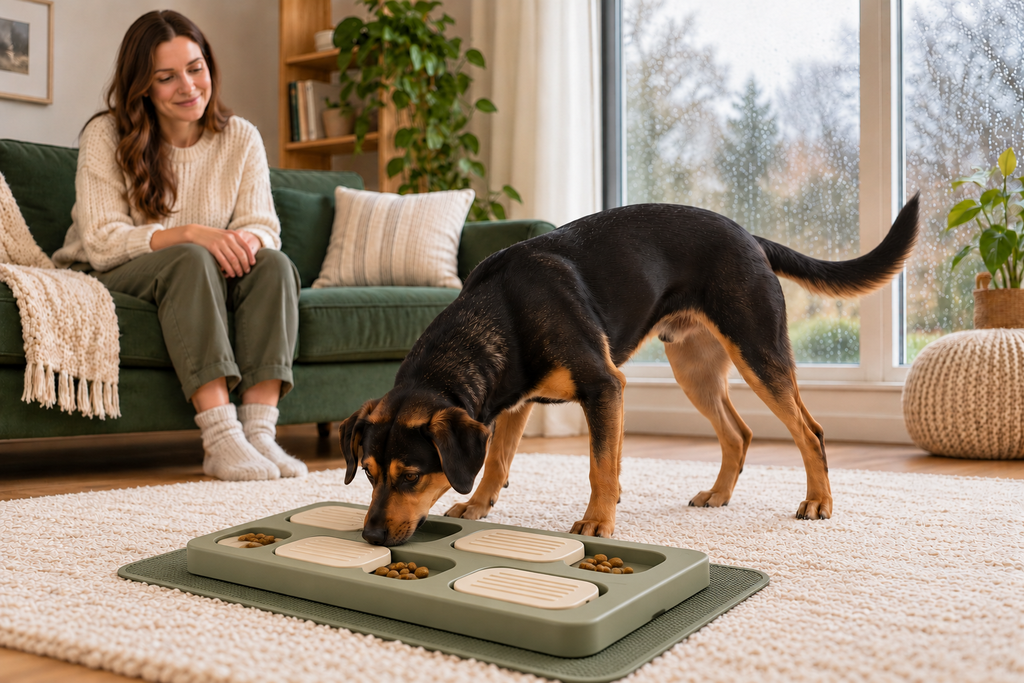
You need: A sturdy beginner food puzzle or food-dispensing toy suited to your dog.
Use part of a meal and begin on the easiest setting. Show your dog an accessible piece so the
activity makes sense. Avoid puzzles with loose parts your dog could swallow. Help if they struggle
rather than leaving them with an impossible task.
Make it easier: Leave compartments open. Success can be quick; a longer challenge is not
automatically a better one.
7. Play a Short Hand-Target Game
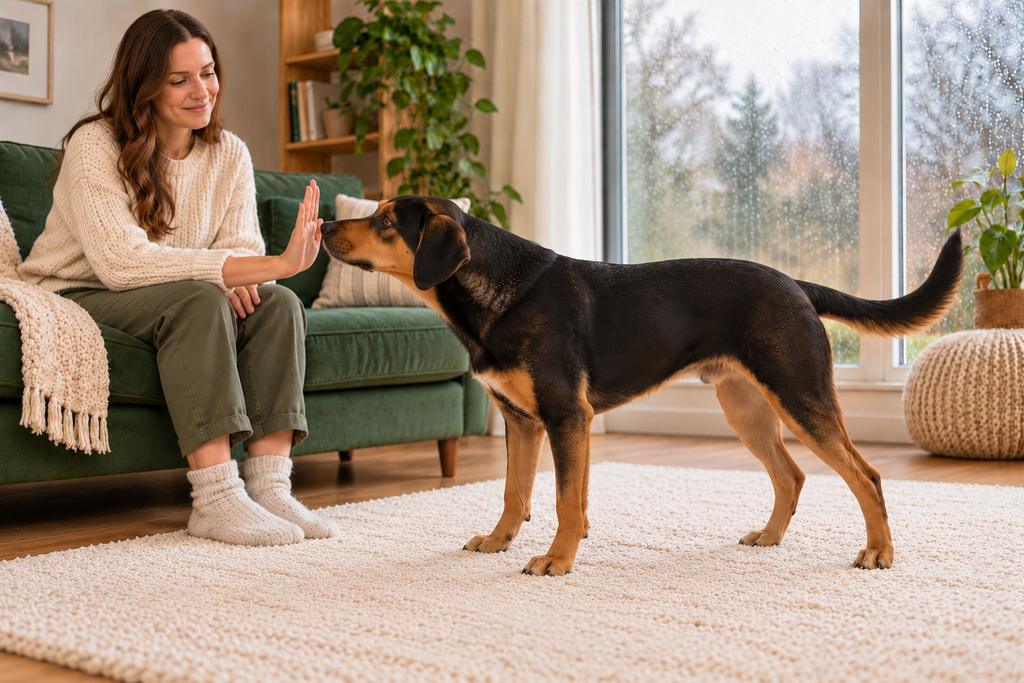
You need: Small food rewards and a willing dog.
Hold an open palm a few inches from your dog’s nose without moving into their face. If they
voluntarily sniff or touch it, say “yes” and reward. Try a few easy repetitions, then pause. This is a
reward-based learning activity, not a reason to press your hand against their muzzle.
Make it easier: Reward interest in the hand at first. Skip the game if hands near their face worry
them. Brief reward-based training can be part of enrichment.
8. Play Easy Human Hide-and-Seek
You need: A familiar adult and a safe, uncluttered room.
Step a little way behind an open doorway while your dog can see where you went, then invite them
over once. Reward their arrival with food, praise, or gentle play they enjoy. Keep it easy and nearby.
Keep it suitable: Skip disappearing games if being separated worries your dog. You can simply
move a few steps across the same room instead.
9. Offer a Two-Toy Choice
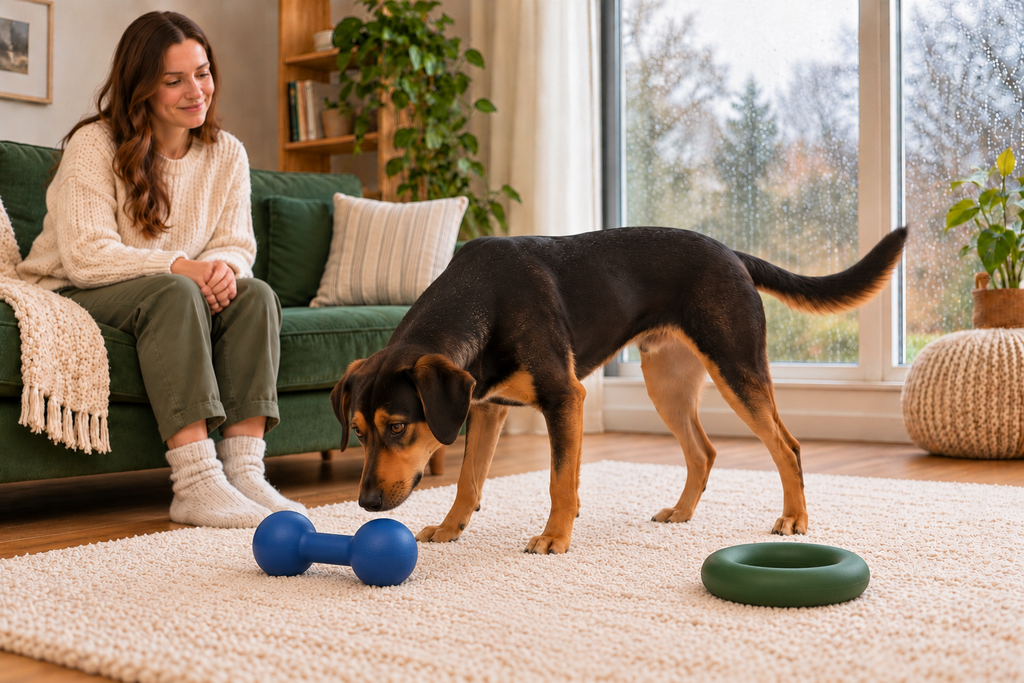
You need: Two safe, familiar toys with different play styles.
Place them apart and let your dog choose. Join in if invited, or let your dog explore without
interference. On another day, rotate one toy for a different familiar option. Notice preferences
rather than expecting every dog to love the same toy.
Make it easier: Offer one familiar favorite if choices seem confusing. Choosing neither is allowed
too.
10. Enjoy a Gentle Tug Session
You need: A sturdy tug toy long enough to keep hands away from teeth.
If your dog already enjoys tug, invite a short game on a non-slip surface. Keep movements gentle
and low; avoid jerking, lifting, or forcing sharp turns. Pause often and let the dog choose whether to
continue. Dogs who dislike tug can return to a search game instead.
Keep it suitable: Skip tug when it conflicts with veterinary advice or your dog’s comfort. Stop if
play becomes difficult to manage safely. Never force open their mouth to remove the toy.
How Do You Know It Is Working for Your Dog?
Look for willing participation, manageable movement, and the ability to pause. If your dog
repeatedly walks away, chews the equipment, or seems frustrated, simplify the task or switch
activities. You do not have to keep increasing the difficulty
Try It With Your Pup: A 5-Minute Indoor Enrichment Pick
Choose one of these five easy starts: find it, an open towel search, a toy hunt, hand targeting, or a
two-toy choice.
- Set up: Clear a small space and choose one suitable activity.
- Try: Offer a few easy opportunities to sniff, search, learn, or play.
- Adjust: Help, simplify, or stop if your dog needs something different.
- Notice: What did they choose? Did they want to continue or take a break?
- Share: Tell us what your pup enjoyed. Five minutes is an optional window, not a minimum or a
target your dog has to meet.
You do not need a perfect setup to create a good moment together. Which indoor enrichment idea
would your dog choose first? There are no small wins here.