
Reading Your Dog’s Body Language
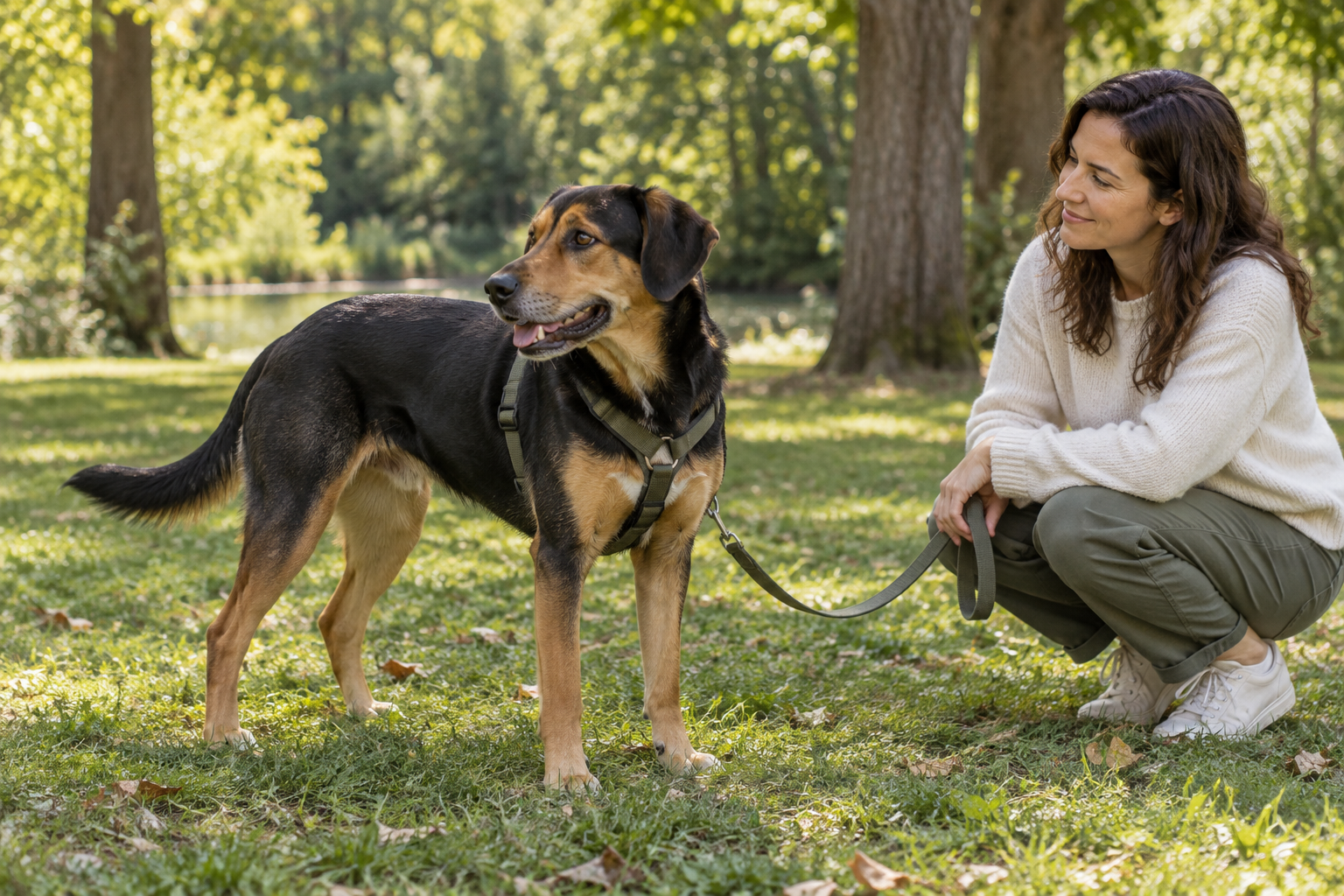
Learning to read dog body language starts with noticing your dog’s whole body, the situation around them, and changes from their usual behavior.
Small signals can help you understand when your dog feels comfortable, uncertain, or ready for a break.
Your dog turns their head as someone reaches to pet them. On a walk, their mouth closes and their body becomes still. During a familiar routine, they suddenly lean away.
These moments are easy to miss. Slowing down to notice them can help you make better choices for your dog.
You do not need to decode every ear twitch. Start by looking at the whole dog, noticing what is happening around them, and learning what is normal for your own pup.
Start With the Whole Dog
A single signal rarely tells the whole story. A wagging tail does not automatically mean a dog wants to be approached. A yawn might mean tiredness, or it might appear during an uncomfortable interaction.
Look at posture, movement, face, ears, and tail together. Then consider the situation: Has someone moved closer? Is another dog staring? Has grooming just started?
Breed and individual differences matter. Curled tails, short tails, floppy ears, and facial features can make some signals harder to see. Compare your dog with their usual relaxed self rather than expecting every dog to look the same.
What Comfort Can Look Like
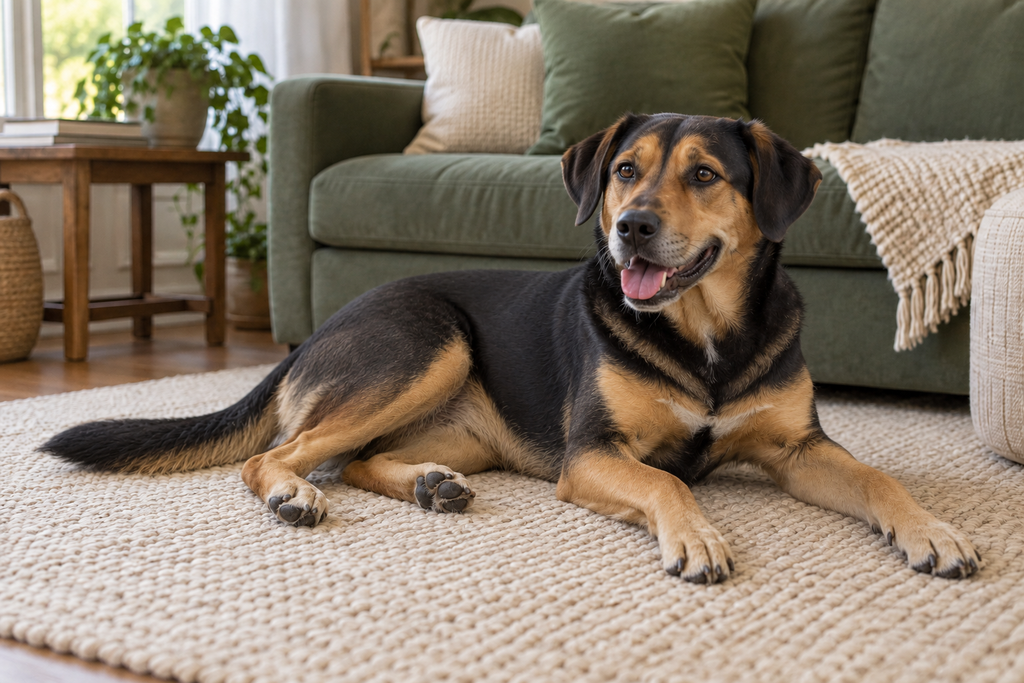
A comfortable dog may have a loose body, soft eyes, a relaxed mouth, and easy movement. They may sniff, rest, or choose to approach without appearing tense.
Look for flexibility: Can your dog turn away, move naturally, and settle? A still dog is not necessarily a calm dog. Notice whether their muscles and expression look soft or tight.
If your dog approaches for attention, offer a brief interaction, then pause. Give them room to move away. Remaining nearby is not proof that they want more touch; keep watching their whole body.
Small Signs That May Mean “I Need Space”
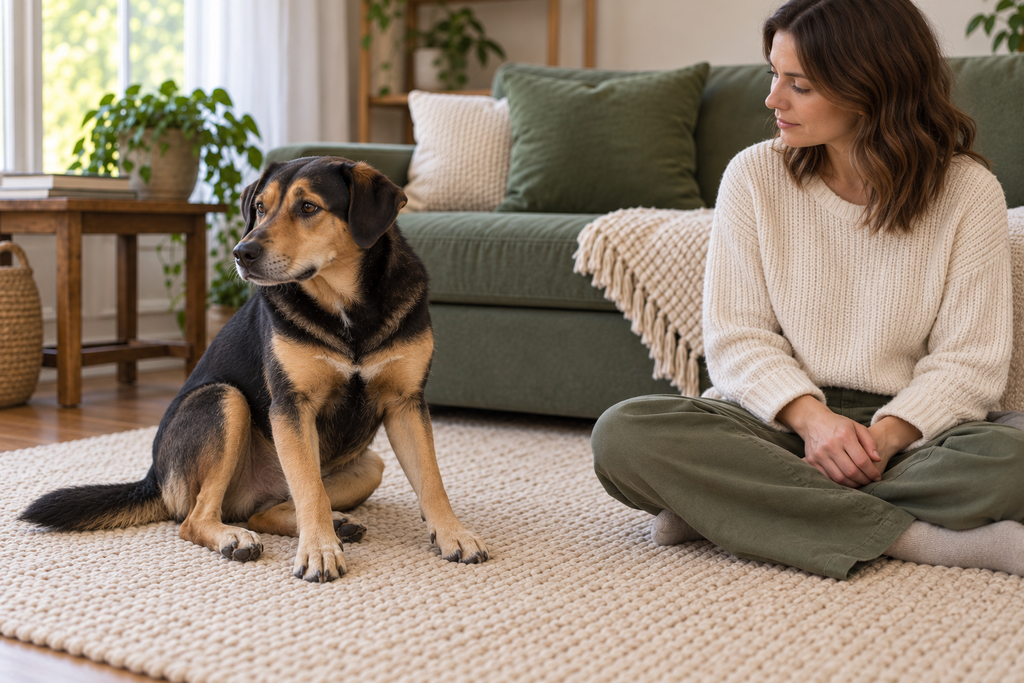
Head turns, leaning away, lip licking when food is not involved, and yawning during a busy interaction can be clues that a dog is uncomfortable. Some dogs lower their body, hold their ears farther back than usual, or move away.
One clue alone does not establish how a dog feels. A pattern, such as leaning away while licking their lips as a hand reaches toward them, gives you more reason to pause.
Stop the interaction and offer space. You do not need to wait for barking or growling before making things easier.
A Wagging Tail Is Only Part of the Picture
Look beyond whether the tail moves. Notice its position compared with your dog’s normal carriage, whether the movement is loose or stiff, and what the rest of the body is doing.
A dog wagging while rigid and staring needs a different response from a dog with a loose, wiggly body. A tucked tail can accompany fear, but a naturally low tail is not automatically a sign of distress. Read the dog in context.
When Excitement Becomes Too Much
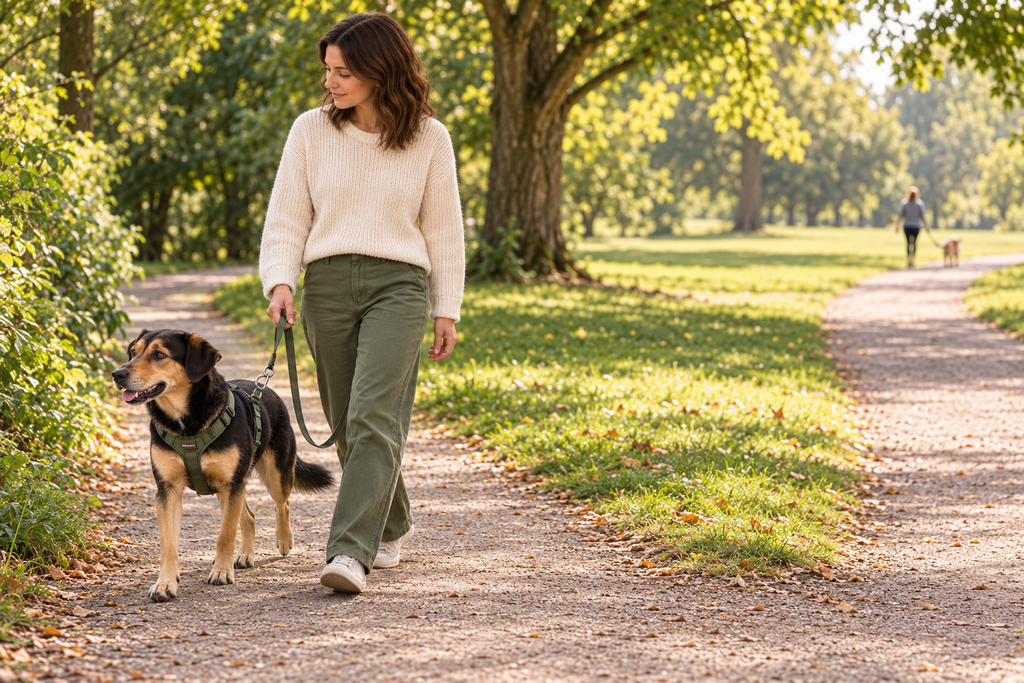
On a walk, your dog may become intensely focused on another dog, stop exploring, or hold their body stiffly. Barking and lunging may follow, but they are not always the first noticeable changes.
Respond early by creating distance and taking an easier route. Skip the greeting. If possible, move behind a visual barrier and give your dog time to recover. Avoid pulling them closer to “get used to it.”
Reactivity can have different causes. Repeated or escalating reactions deserve an individual plan from a qualified professional who uses reward-based methods.
Freezing and Growling Mean Pause
Sudden rigidity, a hard stare, growling, or showing teeth are reasons to stop the interaction and create space safely. Do not reach in to test whether the dog will tolerate more, and do not punish a growl. Punishment may suppress a warning without addressing the underlying concern.
Keep children and other animals away. Do not corner the dog or attempt to take a guarded item by hand. Seek professional help if these situations recur or you are concerned about safety. Dogs do not all show the same signals or follow a predictable warning sequence.
Could Discomfort Be Part of the Change?
A dog who suddenly avoids familiar handling, becomes withdrawn or irritable, or moves differently may need a veterinary assessment. Pain can affect both movement and behavior.
Notice when the change happens, how long it lasts, and whether appetite, activity, or sleep have changed too. A short video of a naturally occurring behavior may help your veterinarian; do not recreate a distressing situation to record it.
Body language cannot diagnose pain or tell you it’s cause. Contact your veterinarian about new, persistent, or concerning changes. For an apparent emergency, contact an emergency veterinary clinic promptly.
Try It With Your Pup: The 60-Second Body Language Check-In
Choose an ordinary, quiet moment. This is an observation activity, not a test.
- Watch for 20 seconds. Look at your dog’s whole body without calling them, touching them, or moving closer.
- Notice for 20 seconds. What do their movement, face, ears, and tail look like? What is happening nearby?
- Choose for 20 seconds. Let a comfortable dog continue. If you notice tension or avoidance, reduce pressure and give them room.
Write one observation in plain language: “They turned away when I reached for the brush.” Avoid turning an observation into a certainty such as “They feel guilty.”
Never deliberately frighten, crowd, or provoke your dog to look for signals. If your dog is already distressed, prioritize space and safety rather than finishing the activity.
Learning to Listen Takes Practice
You will not catch every signal, and that is okay. Learning your dog’s normal and responding to small changes can make everyday care more considerate.
Notice the whole dog. Consider the situation. Give them room to respond.
What is one small signal you have learned to notice in your dog? Share an observation in the
comments-there are no small wins here.